
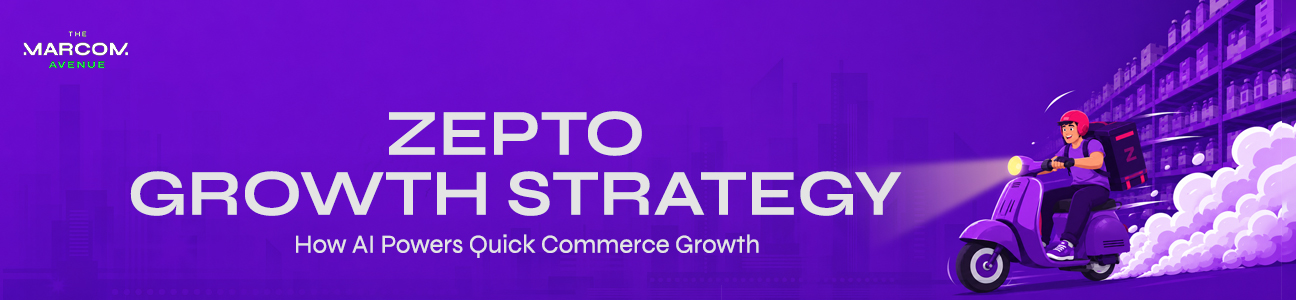
The quick commerce landscape in India has witnessed an unprecedented transformation. What began as a convenience-driven luxury has rapidly evolved into an absolute daily necessity for millions of urban consumers. At the absolute forefront of this hyper-growth vertical is Zepto. This platform has completely redefined retail logistics by delivering groceries, fresh produce, and daily essentials within a mere ten minutes.
Achieving this scale of lightning-fast fulfilment requires far more than just an extensive fleet of delivery executives. It demands a highly sophisticated, automated technological backbone. According to an industry analysis by the Economic Times, the technical infrastructure behind quick commerce platforms must process millions of data points per minute. This proves that the foundational Zepto growth strategy relies heavily on artificial intelligence (AI) and machine learning to orchestrate everything from predictive inventory management to hyper-local route optimisation.
To achieve sustainable scalability, many quick commerce brands actively collaborate with the Best SEO Agency in India to align their digital presence with rapid, real-time consumer intent. As consumer expectations permanently shift towards instantaneous gratification, understanding how AI is used in quick-commerce becomes essential for any modern retail enterprise.
By examining the structural algorithms that power this ecosystem, businesses can unlock the true potential of AI in e-commerce and quick-commerce environments to achieve rapid market expansion.

To fully appreciate the role of predictive technology, one must first explore the foundational framework that provides an understanding of the Zepto business model, explained by highlighting the shift from traditional retail to micro-fulfilment. Unlike traditional e-commerce platforms that rely on massive, centralised warehouses located far outside municipal borders, quick commerce functions through a highly decentralised network of micro-warehouses, commonly referred to as dark stores.
These dark stores are strategically placed in high-density urban areas. They typically service a small, hyper-local radius of only two to three kilometres. The entire model is meticulously optimised to treat time as the ultimate currency. Because these facilities are entirely closed to the public, every square inch is designed purely for operational velocity and frictionless fulfilment.
Operating hundreds of dark stores across multiple major cities introduces a massive logistical challenge: real estate constraints. A typical dark store can only hold a small fraction of the stock-keeping units (SKUs) found in a traditional supermarket. This is precisely where specialised predictive logistics become indispensable.
Managing this complex digital infrastructure requires a deeply unified online footprint. A premium on-page SEO company can optimize this by structuring digital assets to capture hyper-local search intent efficiently, a strategic concept explored in The Marcom Avenue Blog Guide on SEO Friendly Websites.
To protect operating margins, Zepto avoids generic stocking. Instead, local dark stores use custom inventory algorithms tailored to individual pincodes. The system monitors past local carts, weather micro-trends, and local festival calendars to load specific batches of stock per store. This real-time matching keeps slow-moving inventory off valuable racks while making sure bread, milk, or party snacks are physically waiting near the dispatch counter before local demand even peaks.
The underlying technology behind quick commerce growth hinges almost entirely on moving away from reactive logistics to predictive operations. Traditional retail relies on historical reorder points. In stark contrast, quick commerce platforms use real-time predictive demand forecasting algorithms. These AI systems do not merely track what has sold. They actively predict what will sell over the next hour, day, and week.
|
AI Capability |
Functional Quick Commerce Application |
Operational Outcome |
|
Predictive Demand Forecasting |
Analyses weather patterns, local events, and time-of-day buying trends. |
Eliminates out-of-stock scenarios for high-demand items. |
|
Automated Replenishment |
Triggers automated procurement orders to mother warehouses. |
Drastically reduces capital tied up in slow-moving inventory. |
|
Dynamic Expiry Tracking |
Monitors shelf-life metrics and adjusts pricing or bundle visibility. |
Minimises perishable waste by over forty per cent. |
Let us take a practical case scenario. When unexpected rain clouds form over a specific residential block in Delhi NCR, order patterns shift instantly. Zepto's system picks up this immediate trend across early carts, prompting local dispatch centres to prioritise instant food items, hot beverages, and umbrellas before localised waterlogging impacts transit.
This nimble balancing act keeps order delay metrics extremely low even during massive afternoon downpours. These predictive patterns feed straight into backend vendor networks, using the framework outlined in the onboarding breakdowns by SW Cybernetics.
The moment a product stock drops below a shifting, automated floor limit, the software pings distributors with fresh purchase orders without waiting for a procurement manager to sign off. This rolling replenishment loop cuts down delays between massive regional supply hubs and neighbourhood dark stores, building a rapid distribution chain that legacy retail chains struggle to copy.

Once an order is placed on the user application, the ten-minute countdown begins. Within this micro-window, the first sixty to ninety seconds are allocated entirely to the internal picking and packing process. Zepto uses spatial AI to design the physical blueprint of its dark stores, mapping out item placement based on co-purchase probabilities.
If machine learning models identify that consumers frequently purchase fresh milk alongside a specific brand of cereal, the spatial layout algorithm ensures these items are placed along a mathematically optimised path for the floor staff. Handheld picking devices run localised routing algorithms that guide pickers through the dark store aisles via the shortest possible physical path, saving vital seconds per order.
Order Ingestion & Layout Optimisation: 0 to 60 Seconds:- The instant a customer checks out, spatial AI maps out the exact inventory locations inside the local dark store to create the shortest physical route for floor staff.
Intelligent Batching & Packing: 60 to 90 Seconds:- Handheld terminals guide store pickers to gather items along the pre-optimised path while algorithms batch complementary orders to maximise efficiency.
Algorithmic Dispatch: 90 to 600 Seconds:- The packed order is matched with the nearest available delivery executive, launching real-time navigation paths adjusted for live environmental parameters.
Dark stores ditch the manual clipboards and rely on automated camera feeds to police their aisles. Overhead lenses catch it in the split-second a box of biscuits falls over, lands in the wrong bin, or runs out completely, pinging a quick notification to the nearest picker's handheld screen. Fixing these stock mismatches right away stops that annoying scenario where you order an item on your phone only to get a refund text five minutes later because the shelf was actually bare.
The final, and most visible, leg of the quick commerce journey happens on the open road. Managing a massive fleet of delivery executives across congested urban centres requires complex multi-variable optimisation. Zepto’s routing engine uses advanced machine learning models to analyse thousands of data points every second, including live traffic updates, localised construction delays, weather variables, and historical delivery times for specific apartment complexes.
Rather than assigning riders to orders arbitrarily, the AI system utilises dynamic batching mechanisms. If two distinct orders are placed within minutes of each other from the same residential society, the system intelligently assigns both packages to a single executive. This precise batching maximises fleet utilisation, reduces delivery costs, and ensures that riders can complete journeys safely without exceeding speed limits.
This deep integration of intelligent logistics demonstrates how modern enterprises leverage digital infrastructure to dominate competitive spaces. Organisations looking to build comparable digital search authority frequently seek specialised SEO consulting services to ensure their local digital discovery channels are as thoroughly optimised as their physical supply chains. Through continuous algorithmic training, the delivery engine learns from every single trip, constantly refining its estimated time of arrival predictions to provide consumers with a transparent, highly dependable experience.
Zepto’s explosive growth gives other consumer brands a clear blueprint for modern retail. Surviving the current digital shift takes more than selling a premium product. It requires a connected network that reads early buying signals, letting companies prepare for what buyers want before those users even hit the checkout button.
Zepto’s hyper-local warehouse mapping shares an identical operational philosophy with modern search marketing. Just as a dark store arranges physical racks to match buyer habits, websites must map out their digital architectures to mirror user intent. This clear marketing parallel is thoroughly examined in our blog on AI Transforming Digital Marketing in India.
To cross this digital hurdle, expanding brands rely heavily on the technical setup of the best SEO company in India to convert unoptimized web directories into smooth customer acquisition loops. Integrating AI SEO services lets webmasters crawl massive search data sets, isolate hidden user buying patterns, and update metadata far faster than old manual methods allowed. Approaching digital visibility with this calculated, data-first mindset ensures your enterprise secures a dominant, long-term market presence.
Speed and precise targeting decide which businesses stay ahead online. Brands wanting to grow fast must claim the highest spots on Google search pages. This is where The Marcom Avenue helps, acting as a data-focused marketing partner that sets up the Best Digital Marketing Services in India. By using sharp data tools and clear consumer insights, this agency builds high-performing setups that help companies scale their web presence without wasting resources.
Whether an expanding business wants to hire a Best SEO Agency in India to rank for high-competition commercial keywords, or needs targeted local search adjustments to bring in nearby regional leads, their search specialists build practical campaigns focused on direct revenue growth. In online marketing, winning depends on being seen first. Having an optimised, visible website ensures your business stays ahead of the competition. Contact their advisory team today to see how search-first setups can accelerate your traffic metrics.




I have more than 5 years of experience in digital strategy and content creation, I lead the Search Marketing team at The Marcom Avenue. I am passionate about innovation and data-driven decisions, I’m committed to providing valuable insights and highlighting emerging trends to empower marketers. Let’s work together to unlock the full potential of search marketing!


 How Coca-Cola Uses AI to Personalise Advertising and Improve Customer Engagement
 Duolingo Marketing Strategy: How Social Media Turned a Language App into a Global Brand
 Growth Marketing Explained: Key Pillars, Strategies, and Best Practices