
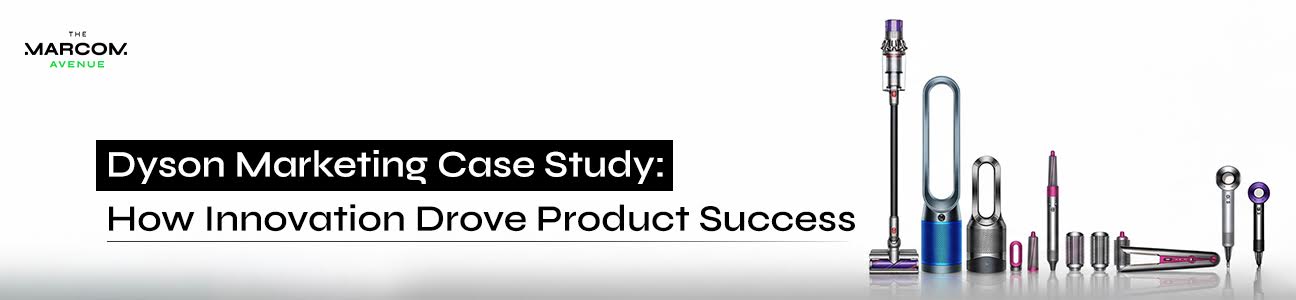
Forget the million-dollar billboards and the celebrity face-sharing. James Dyson didn’t care about "branding" in the 70s; he cared about the fact that his vacuum cleaner was a piece of junk that kept losing suction. This Dyson Marketing Case Study isn’t some polished corporate success story or a collection of clever slogans. It is a gritty, fifteen-year autopsy of what happens when a backyard engineer fails 5,127 times before finally hitting a breakthrough.
We live in a world where "planned obsolescence" is the lazy corporate shortcut to a quarterly profit. Against that backdrop, the Dyson business model is a middle finger to the status quo. By treating a boring floor cleaner as a high-stakes physics problem, Dyson did something ridiculous. He turned a loathsome Saturday chore into a premium, high-tech status symbol that people actually saved up to buy.
The core of the Dyson business strategy is rooted in the idea that a good product should sell itself. This is one of the most cited product-led growth examples in modern history. Instead of competing on price, Dyson competed on physics.
When the DC01 launched in 1993, it was priced significantly higher than its competitors. However, the Dyson marketing strategy did not focus on the price tag. It focused on the clear bin. By showing people exactly how much dirt they were picking up, Dyson turned a technical feature into a psychological reward. You were not just cleaning your house. You were winning a battle against dust.

For modern brands, this level of transparency is exactly what an Artificial Intelligence Optimisation Company seeks to highlight. In a digital world where trust is the primary currency, showing the how and the why behind your service is the only way to build lasting authority. This mirrors the shift we are seeing today were AEO and GEO are changing traditional SEO by forcing brands to provide concise, fact-based responses rather than just fluff.
You cannot discuss how Dyson became successful without mentioning the grit required to fail five thousand times. The Dyson innovation strategy is built on a culture of "wrong thinking." While competitors were busy trying to make cheaper bags, James Dyson was trying to eliminate the bag entirely.
This obsession with radical improvement is the backbone of any real innovation-driven marketing strategy. Looking at the Dyson 2023 Annual Review, the company still dumps a massive chunk of its profits straight back into R&D. They have locked in a ₹34,000 Crore investment plan to chase new technologies, proving that they value the lab more than the boardroom.
In our own work at The Marcom Avenue, we often discuss how to humanise technical data to ensure that a brand's innovation remains visible to both search engines and human beings. Dyson proved that technical specifications can be the most compelling narrative a brand possesses. When your product solves a problem, the data becomes the hero of the story.
|
Strategic Pillar |
Traditional Approach |
Dyson Approach |
|
Market Entry |
Price-war and heavy discounts |
Premium pricing based on R&D |
|
Product Focus |
Incremental aesthetic updates |
Radical engineering shifts |
|
Marketing Tone |
Emotional and lifestyle-driven |
Technical, blunt, and transparent |
|
R&D Culture |
Safe, market-tested ideas |
High-risk, prototype-heavy cycles |
Dyson’s pivot from floor-care to hair dryers and air purifiers is a masterclass in not being a one-trick pony. They avoided the lazy corporate trap of just slapping a famous logo on generic gadgets. Instead, they took their core obsession with high-speed digital motors and airflow physics and forced it into entirely different industries. They took their core competency, air movement and motor technology, and applied it to new industries.
The Supersonic hair dryer was not just another beauty tool. It was a piece of high-end machinery designed to prevent heat damage. By repositioning a hair dryer as a health and safety device for your hair, they justified a ₹40,000 price point in a market used to ₹3,500 tools.
Dyson reported that its Beauty and Home categories were significant drivers in its ₹77,000 Crore revenue performance, proving that their Dyson business model of high-margin, high-tech products is incredibly resilient even in fluctuating economies.

This level of strategic pivots is what we often discuss when helping clients with the Best Digital Marketing Services in India. It is about identifying your core superpower and finding new ways to deploy it across different digital landscapes.
Dyson rarely uses traditional advertising to sell. Instead, they use it to explain. Their ads look like blueprints. Their stores feel like science museums. This is a brilliant PR agency in India move because it frames the brand as an educator rather than a salesman.
This hands-on interaction is a physical manifestation of an effective SEO Services in India strategy. It is about answering the user’s biggest frustrations before they even have to type them into a search bar.
This is the new reality of the digital landscape. Google and other platforms are now aggressively rewarding brands that lead with raw utility instead of a loud sales pitch. This shift proves that AI is transforming search by sidelining the "fluff" and putting direct, technical answers at the top of the page.
If you look at the best SEO company in India, the ones that actually deliver results are not the ones following a checklist. They are the ones treating SEO as an engineering problem. They are looking at the site architecture, the data delivery speeds, and the user intent with the same obsession James Dyson had for suction power.
At The Marcom Avenue, we believe that marketing is only as strong as the product it represents. This is why we focus on humanising technical data, ensuring that your brand’s innovation is visible to both search engines and actual human beings.
The final takeaway from this Dyson Marketing Case Study is simple. Innovation is not just a department. It is the most potent form of marketing you can own. When you solve a genuine, nagging problem, the world will find you, even if your price tag is ten times higher than the person next to you.
Success in 2026 is not a matter of outspending rivals on noisy ads. It is about out-thinking them in the lab. It is about using an innovation-driven marketing strategy to tell a story with absolute transparency. People do not buy the polish. They buy the proof.
If you are ready to stop chasing empty vanity metrics and start building a brand that actually lasts, you need a partner that respects the technical grit behind the glamour. Whether we are refining your SEO Services in India or launching a global campaign, our goal remains static. Solve the problem better than anyone else. The rest is just noise.




With over 6 years of expertise in crafting digital strategies in SEO industry, I head the SEO team at The Marcom Avenue, driven by innovation and data-backed decisions. I’m dedicated to sharing valuable insights and emerging trends to empower marketers. Together, let's unlock the true potential of digital marketing!


 What Is URL Structure in SEO? Best Practices and Impact on Rankings
 How McDonald's Used Hyperlocal Advertising to Drive Store Visits: A 2026 Case Study
 SEO for Shopify: The Ultimate Guide to Higher Rankings